Private advisory
Office Hours
With Chanel
A private AI advisor for entrepreneurs and operators. One relationship. Every part of your work.
Scroll
A private practice for serious work.
Office Hours is Chanel's private AI advisory practice for entrepreneurs and operators who need one trusted person across everything they're building.
There are no slides, no cohorts, no frameworks borrowed from someone else's industry. Clients work directly with Chanel to move from scattered experimentation to a clear direction: what to build, what to automate, and what to stop doing manually.
Every engagement is built around your specific situation. The work is rigorous, and the conversations are direct. Everything stays private.
For entrepreneurs building things and operators running them.
You are building across multiple businesses at the same time — a sales practice, a startup, a podcast, a brand. Each one has a different AI problem, and you are expected to have an answer for all of them.
Most AI advice is designed for someone building one thing. You are not that person. You are the strategy, the team, and the execution. When the question of "who owns AI here" comes up, the answer is you.
Office Hours is built for that situation. Clients are typically founders and early-stage operators who need someone to sit inside their actual work — across all of it — and help them build systems that hold. It is not a course, not a cohort. It is work that is specific to what is in front of you.
The same goes for the Chief of Staff, the Head of Product, or the technical leader who has inherited the AI question without a clear brief. You understand the landscape. You need someone to help you translate that into the decisions you are making right now.
What clients have in common is this: they have already seen enough frameworks. They want someone who will look at the specifics of their situation and tell them exactly what to do.
How we work together.
Residency
6 to 10 weeks of AI strategy built entirely around your work.
The engagement does not follow a curriculum. There are no modules, no reading lists, no frameworks designed for a different industry. The work starts with what is actually in front of you — the decisions you are making, the tools you have access to, and the places where AI can do something real.
By the end, you will have a clear AI strategy, a sharper sense of which opportunities are actually worth pursuing, and enough judgment to keep making good decisions once the engagement ends.
Some engagements begin with a focused two-week assessment — a clear map of where AI can create value in your specific business before the full Residency begins. If you are unsure of the scope, this is often the right place to start.
Advisory
One advisor across everything you're building.
The Advisory is for entrepreneurs and operators who are navigating AI across more than one business at once. The rhythm is steadier than a project engagement — three to six months, ongoing — and the relationship is built on full context. It is not one slice of what you are building. It is all of it.
The work shifts as your situation does. As new opportunities surface and the landscape moves, you have someone who already knows your context well enough to think alongside you on decisions as they come up.
The Advisory is typically for clients continuing from a Residency, or those managing multiple ventures at the same time.
What the work actually looks like.
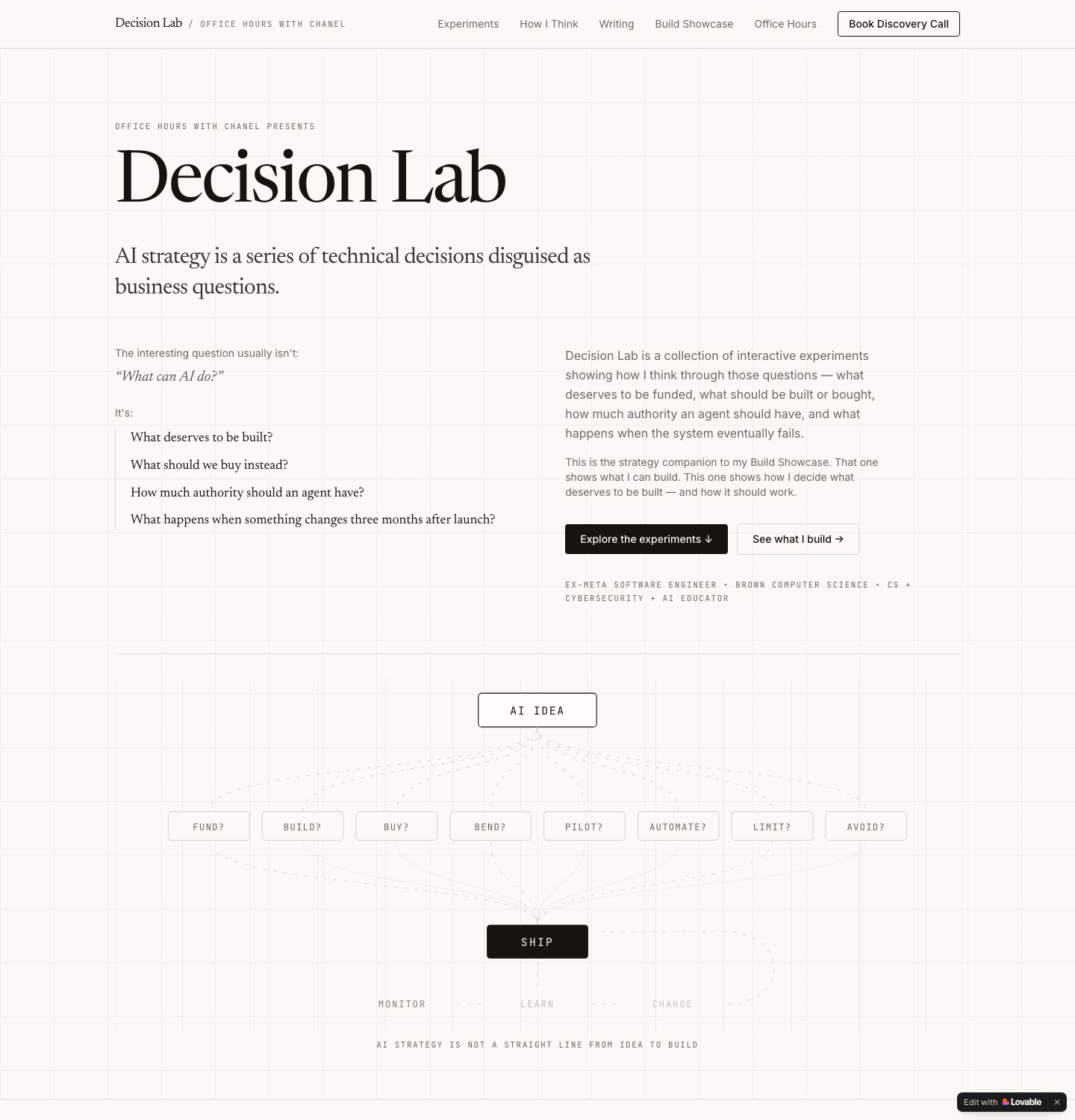
AI strategy is a series of technical decisions disguised as business questions.
Decision Lab is a collection of interactive experiments walking through those decisions: what deserves to be built, what should be built by hand, how much authority to give an agent, and what happens when the system eventually fails.
-
01
The AI Draft
You have a limited AI budget. What actually deserves to get funded?
-
02
Build / Buy / Bend
You need the capability. You don't necessarily need to build the software.
-
03
Blast Radius
How much authority should you actually give your AI agent?
-
04
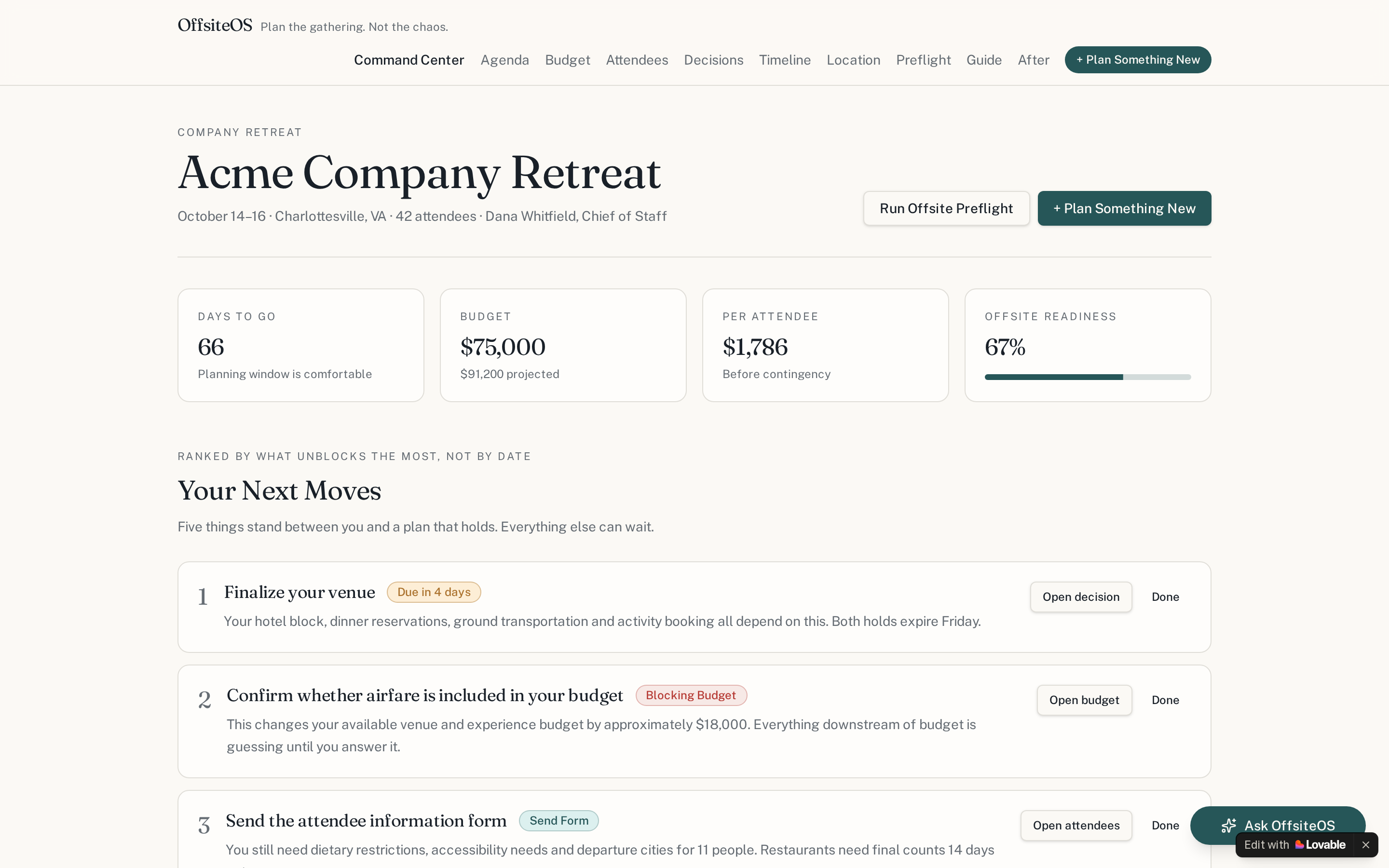
One Bad Tuesday
Something worked perfectly for three months. Then Tuesday happened.
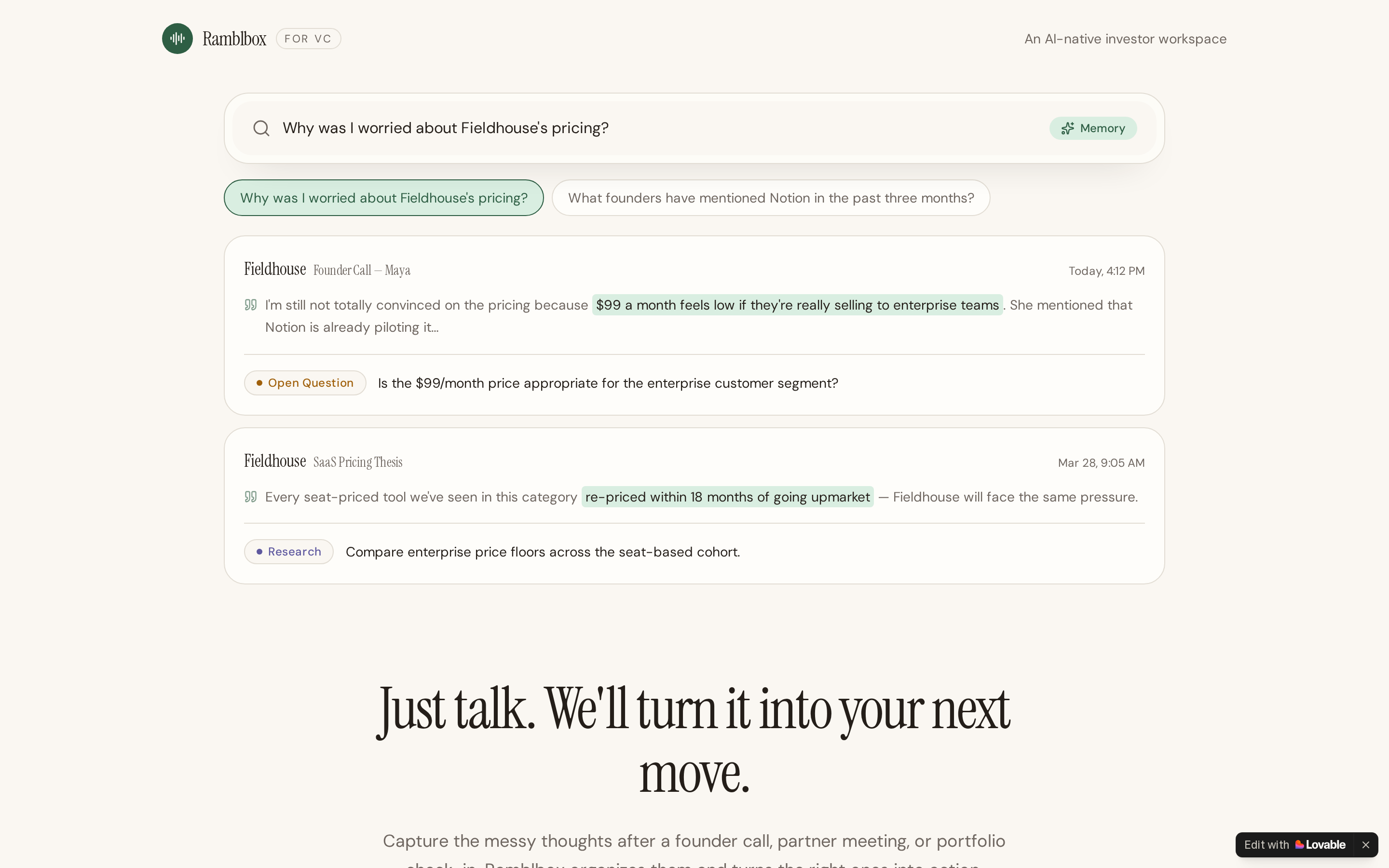
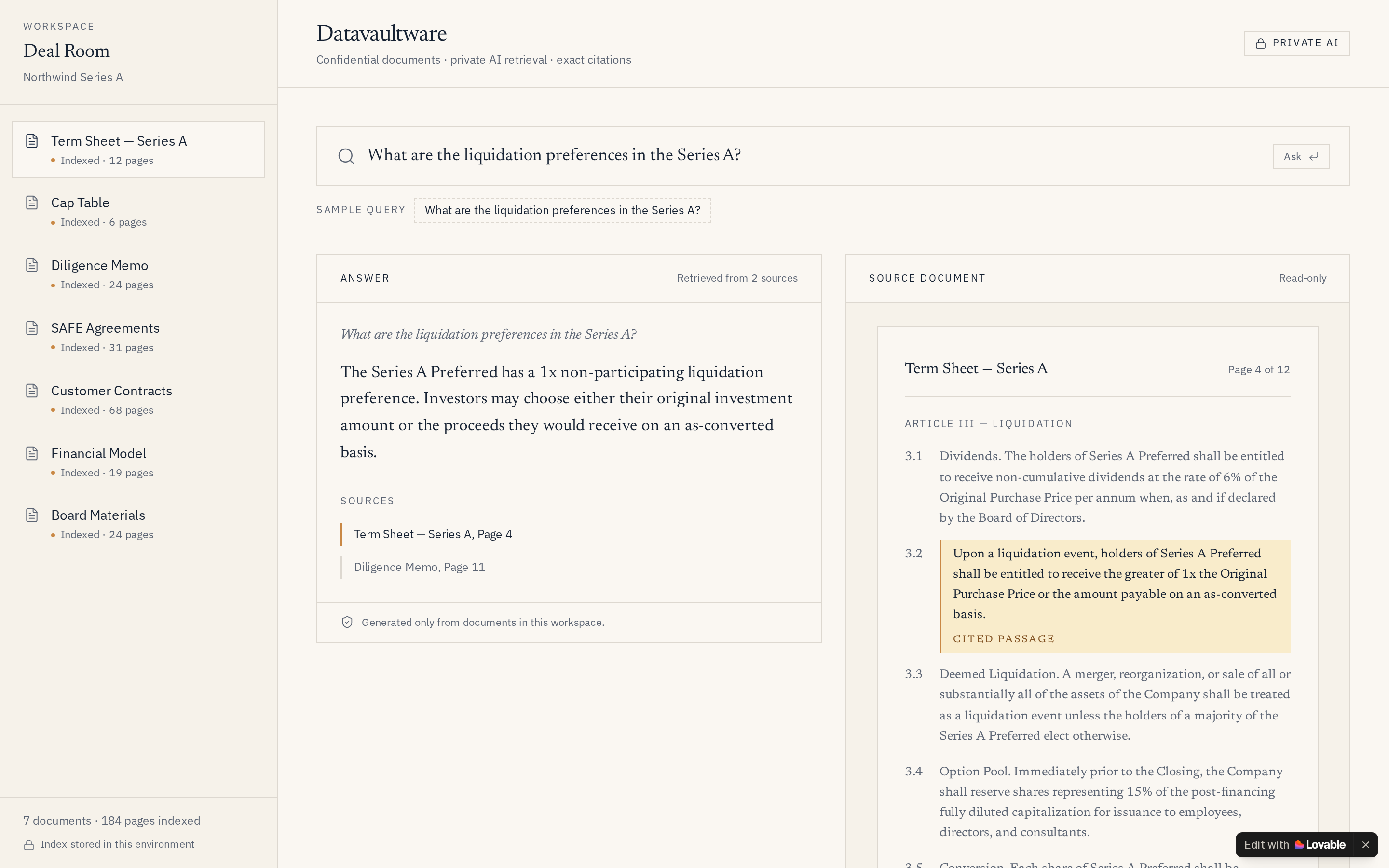
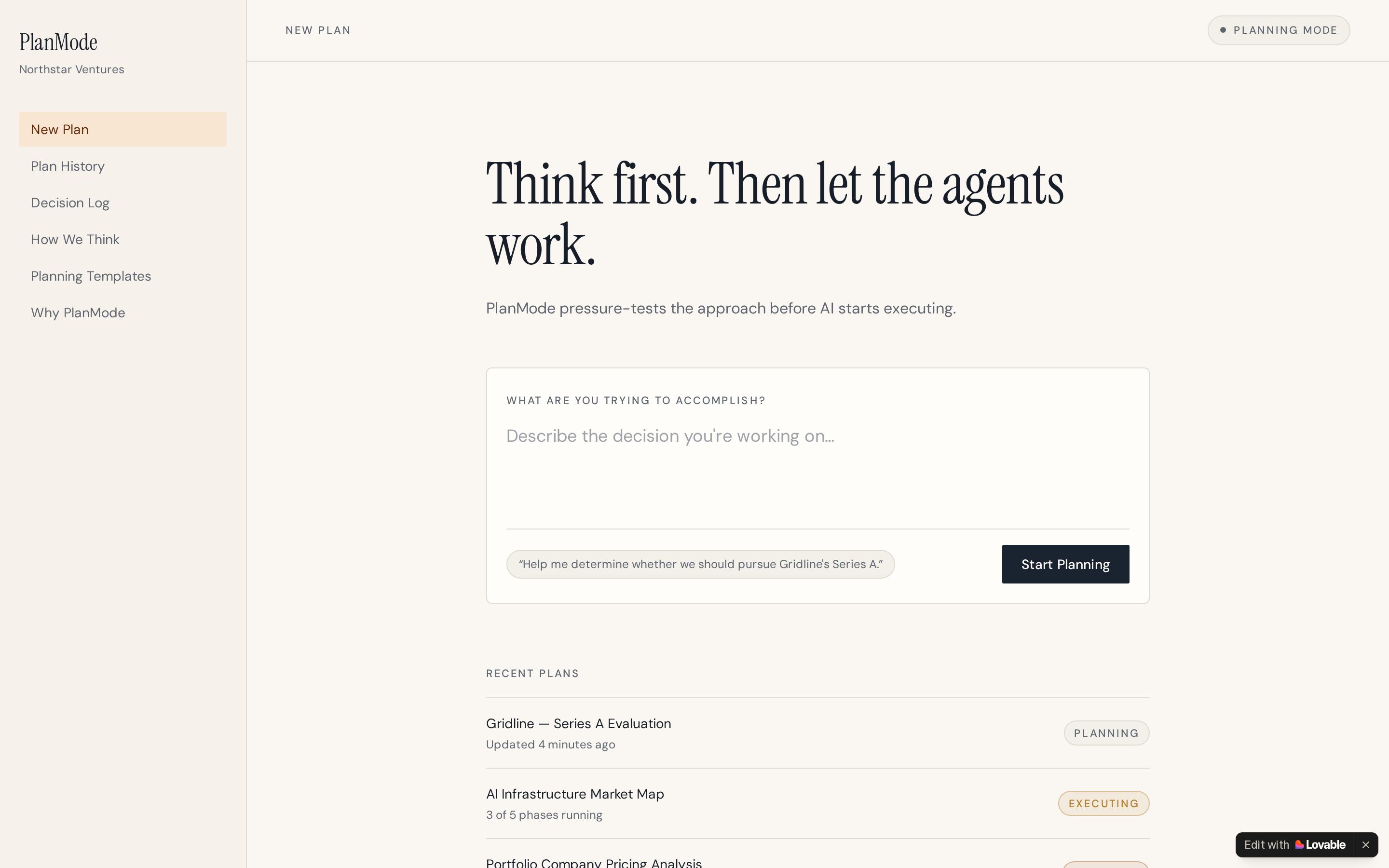
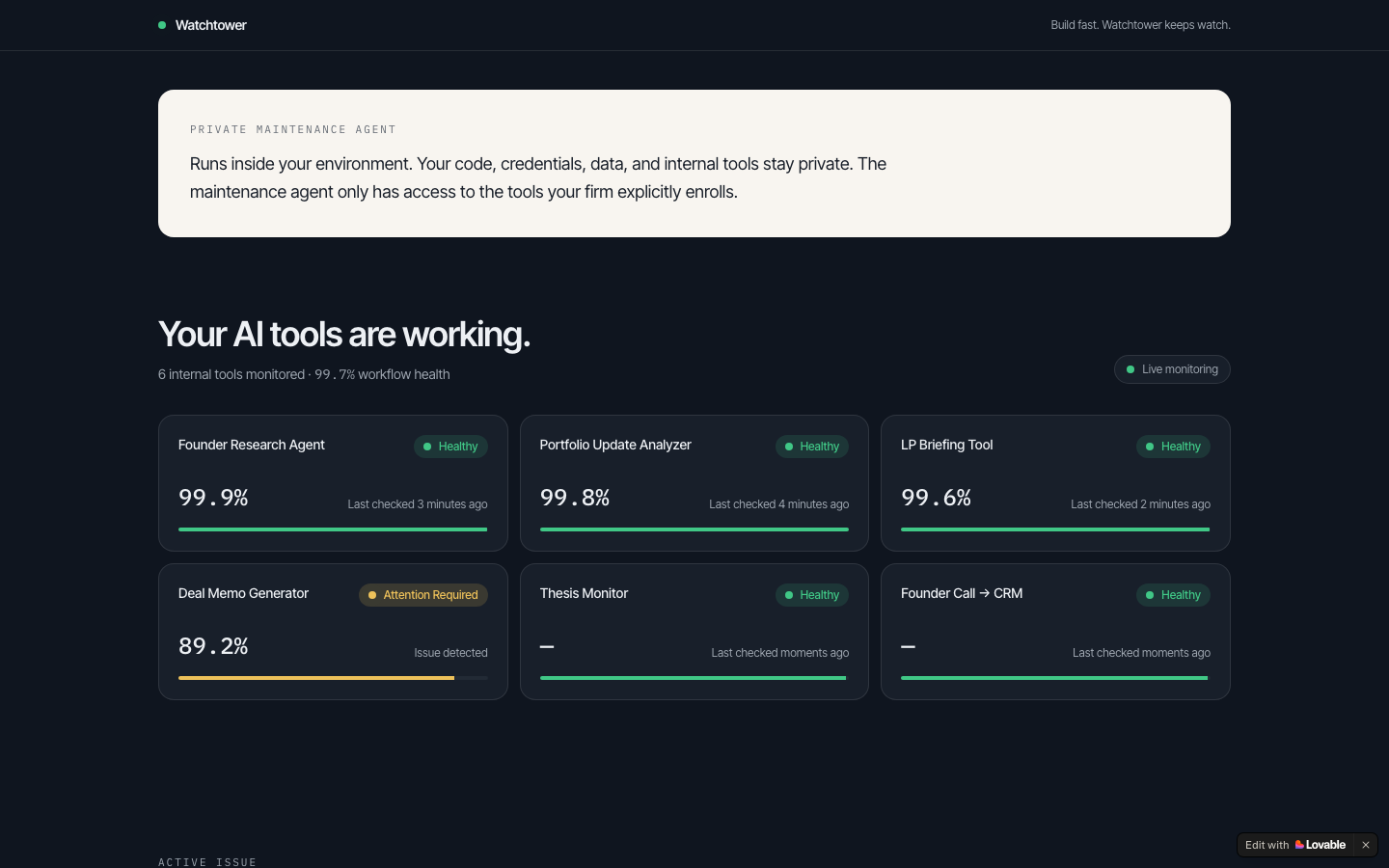
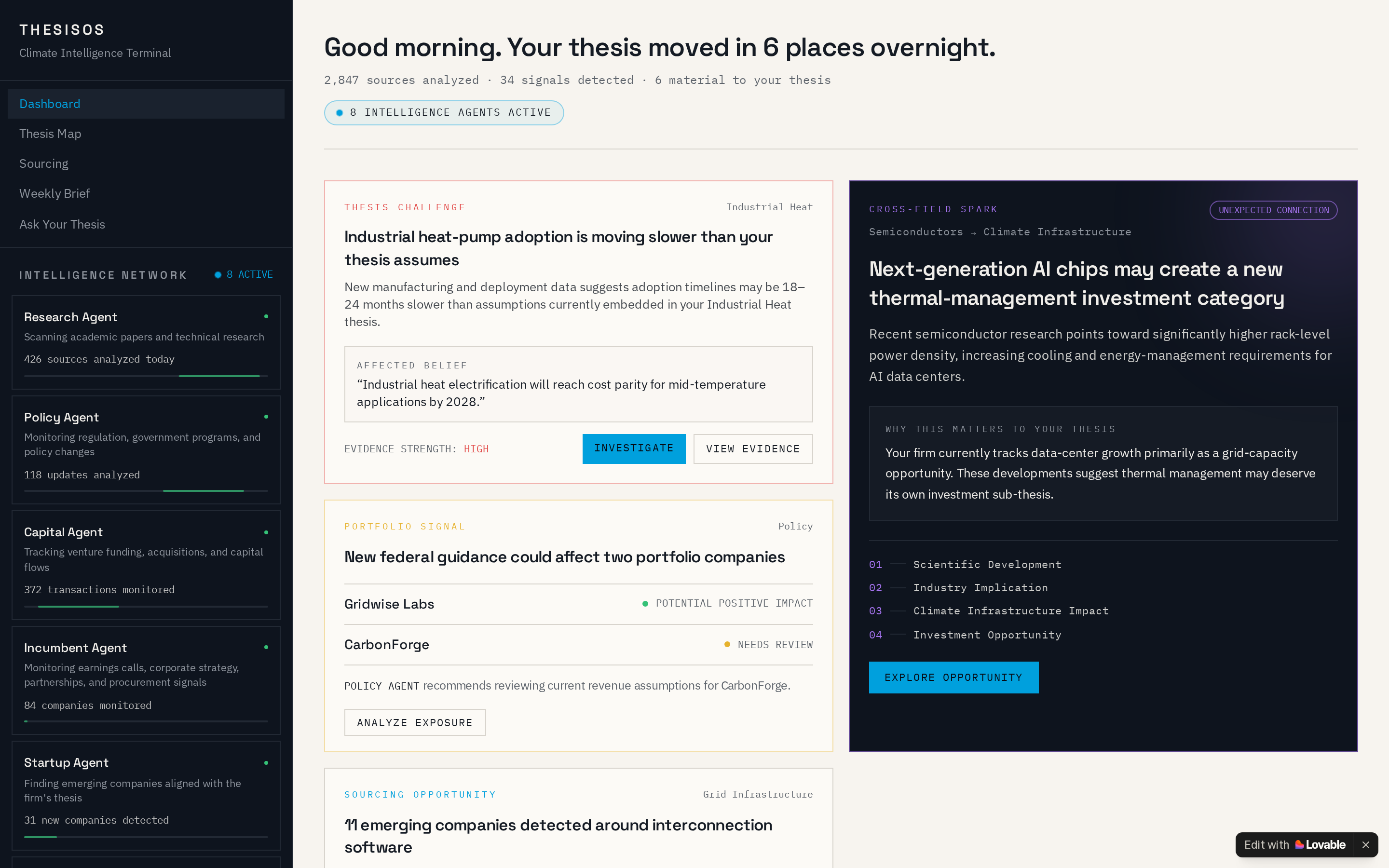
Every prototype below is a clickable concept, built to show what a working version could look like after a three-month build.
Early clients include:
-
 A Partner and VP of Sourcing at She's Independent Investments
-
 A GP and Founder of RareBreed Ventures
Common questions.
What does working together actually look like?
Every engagement begins the same way: a clear-eyed look at your business. Where time is being spent, where decisions are being made, where the friction is, and where the real leverage is. From there, we identify where AI can create meaningful value and build a plan for how to go after it.
This is an active strategic relationship, not a course with weekly lessons. We work through problems in real time, pressure-test decisions together, and stay in the work long enough to see what actually changes.
The goal is for AI to be doing work across your business by the time the engagement ends, not for you to have a sharper abstract understanding of what is possible.
How is this different from hiring an AI consultant or agency?
Most AI work starts with the solution. Build an agent. Automate the workflow. Implement the platform. The question of whether that solution changes anything important often comes later, if at all.
The work here starts earlier: what outcome are we actually trying to change, and is AI the right way to change it?
That question shapes everything else — the intervention, the scope, the sequence, and whether to build anything at all. Some of the most useful work in an engagement is deciding what not to do, or doing something much smaller and cheaper first to test the assumption.
When something does deserve to be built, the design questions matter as much as the technical ones. Who owns it. How much authority it should have. What happens when the model is wrong. How the business changes around it. These are not afterthoughts.
What kind of results should I expect?
The work produces clarity, not a longer list of AI use cases, but a defensible position on which ones are worth your company's time, capital, and attention, and which ones are not.
That might mean a set of AI priorities your team can actually act on. It might mean a decision to build, a decision to wait, or a design your team can execute with confidence. The specific output depends on what the business needs most.
The engagement is always working toward the ability to answer the questions that actually determine whether AI work succeeds. What are we trying to change? Is AI the right intervention? What has to be true for this to work in the real world? What should we deliberately not build? What deserves capital now?
Most AI engagements don't spend much time on those questions. This one does.
Is this right for me if I'm running more than one business?
It is built for it. Most advisory engagements are designed around a single company with a single problem. Office Hours is designed around you, which means if you are building across a sales business, a startup, and a media brand at the same time, we work across all of it.
The Advisory engagement exists specifically for that kind of complexity. Three to six months with an advisor who knows your full context is a different kind of asset than a one-time strategy session for any one of your businesses.
Do I need to be technical?
No.
Some clients want to understand how the technology works. Others want to know what it can do, what it cannot, and how to direct the people and tools around them more effectively. Office Hours is built around what you actually need, not a curriculum, not a certification, not someone else's definition of AI literacy.
The most important thing you bring is not technical knowledge. It is a real business with real decisions in front of it.
What makes Office Hours different?
Most AI advisory operates at one of two altitudes: too technical to be strategic, or too surface-level to create real change. Office Hours sits between them, built by someone who has shipped production systems at Meta and can make those systems strategically legible to the people running real businesses.
The teaching background is a specific part of that. High school is the hardest room to hold. Students are not paying customers. They did not choose to be there. If you can make a technically complex concept land in that environment, you develop something most advisors do not have: the ability to tell the difference between someone who genuinely understands and someone who is nodding. That distinction determines whether a strategy actually gets implemented or just agreed to in the room.
Teaching also develops a different relationship with sequencing. Curriculum design is strategy — you cannot teach calculus before algebra, and in AI, what you address first determines what becomes possible later. And when a concept does not land, you do not repeat yourself louder. You find another way in. Most advisors have one explanation. This work requires five.
The standard here is simple: AI should be creating measurable value in your business. Everything else is noise.
Book a free discovery call.
Thirty minutes, no commitment. Bring a question, a decision, or a business that needs AI and no clear path forward. If there's a fit, Chanel will follow up directly.
Currently accepting a limited number of new engagements.
Schedule a callChanel Johnson
Chanel Johnson is a Brown CS graduate and former Senior Software Engineer at Meta, where she spent nearly five years building production systems across Instagram, Facebook, Messenger, and Threads.
She scouts venture deals for Laconia Capital, NDVC, and The Council. She completed VC University on a full scholarship, working directly with Mac Conwell of RareBreed Ventures. She continues to build and ship software of her own.
She also teaches AI and computer science, and this is where her advisory work becomes possible. Most people who understand AI at a technical level cannot translate it for a business audience. Most people who can speak to business leaders have never actually built anything. Teaching is the discipline that closes that gap: it demands making something technically complex strategically legible, and doing it precisely. That is an uncommon combination, and it is the one that makes Office Hours worth something.
Office Hours exists for the operators and entrepreneurs who know AI should be doing more inside their businesses, and who are done waiting for someone to show them exactly where.